
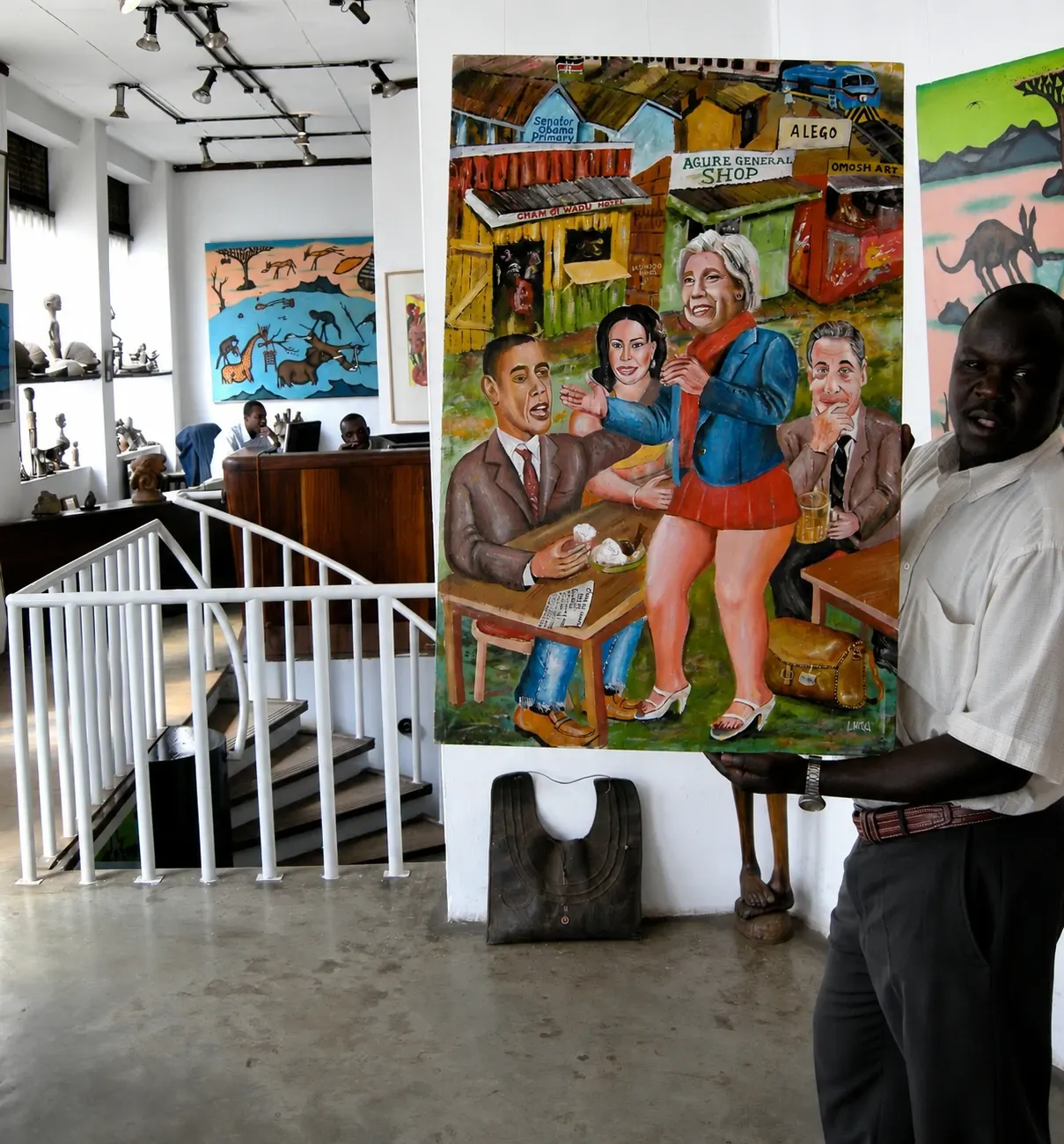
A Gallery That Helped Shape East African Contemporary Art
For more than four decades, Gallery Watatu stood as one of East Africa’s most respected centres for contemporary art. More than simply a gallery, it became a place where artists found encouragement, collectors discovered exceptional talent, and conversations about African art flourished.
Its story is woven into the history of modern Kenyan and East African art.
Founded in 1969 in Nairobi by Robin Anderson, Jony Waite, and David Hart, Gallery Watatu emerged during a period of growing artistic confidence in post-independence Kenya. From its earliest years, the gallery provided an important platform for painters, sculptors, and printmakers, helping introduce contemporary African art to audiences both locally and internationally.
As Nairobi developed into one of Africa’s leading cultural centres, Gallery Watatu became one of its most recognised artistic institutions.
A New Chapter
In 1985, Gallery Watatu entered a defining new chapter when it was acquired by Ruth Schaffner and Adama Diawara.
Together they brought renewed energy, international perspective, and an unwavering commitment to East African artists. Their vision extended beyond exhibiting artwork—they wanted to create a gallery where artists could build lasting careers, where collectors could discover authentic contemporary African art, and where meaningful cultural exchange could take place.
Under their stewardship, Gallery Watatu grew into one of East Africa’s leading contemporary art galleries, earning a reputation for professionalism, integrity, and artistic excellence.
Many artists who exhibited at Gallery Watatu would later gain national and international recognition, while countless collectors first encountered contemporary East African art through its exhibitions.
More Than a Gallery
Gallery Watatu was never simply a commercial gallery.
It became a meeting place for artists, collectors, diplomats, scholars, journalists, students, museum professionals, and visitors from around the world. Ideas were exchanged, friendships were formed, and careers were nurtured within its walls.
For emerging artists, the gallery offered something invaluable: belief.
Many found their first professional exhibition at Gallery Watatu. Others established relationships with collectors that would support their careers for decades. The gallery became known not only for exhibiting exceptional art, but for encouraging artists to remain authentic to their own creative voices.
Its influence reached far beyond Nairobi, helping position East African contemporary art within the broader international art community.
Championing East African Artists
Throughout its history, Gallery Watatu represented many of East Africa’s most respected painters and sculptors while continually introducing new talent to the public.
The gallery believed that artistic excellence should be recognised regardless of age, background, or commercial success. Emerging artists exhibited alongside established names, creating an environment where creativity and experimentation were encouraged.
This commitment to discovering and nurturing talent helped shape an entire generation of East African contemporary artists and contributed significantly to the region’s cultural identity.
Continuing the Vision
The passing of Ruth Schaffner in 1996 marked a significant moment in the gallery’s history.
With dedication and determination, Adama Diawara continued the work they had built together, ensuring that Gallery Watatu remained faithful to its mission of supporting artists and promoting East African contemporary art. Under his leadership, the gallery continued organising exhibitions, strengthening relationships with collectors, and providing opportunities for artists to reach new audiences.
During its later years, Gallery Watatu also benefited from the leadership of Osei Kofi, who played an important role in managing the gallery’s day-to-day operations and continuing its commitment to supporting East African artists. His contribution helped sustain the gallery’s activities during its final chapter, building upon the vision established by Ruth Schaffner and Adama Diawara.
Gallery Watatu remained an important cultural institution until 2011, when it closed its doors after more than forty years of service to the artistic community.
An Enduring Legacy
Although Gallery Watatu no longer exists as a physical gallery, its influence continues to resonate throughout East Africa and beyond.
Its legacy lives on through the artists it championed, the collections it helped build, the exhibitions it organised, and the countless lives it touched. Many artworks first exhibited at Gallery Watatu now reside in private collections, museums, and institutions across the world, continuing to tell the story of East African creativity.
More importantly, Gallery Watatu demonstrated that East African artists could stand confidently on the international stage while remaining true to their own cultural identity.
Today, Diawara & Schaffner Gallery proudly honours and preserves that remarkable legacy.
While it is not a continuation of Gallery Watatu in the commercial sense, it carries forward the values that defined the gallery for more than four decades: supporting artists, documenting artistic history, encouraging cultural dialogue, and ensuring that the story of Gallery Watatu remains accessible to future generations.
Gallery Watatu at a Glance
- 1969 – Founded in Nairobi by Robin Anderson, Jony Waite, and David Hart.
- 1985 – Acquired by Ruth Schaffner and Adama Diawara.
- Developed into one of East Africa’s leading galleries for contemporary African art.
- Represented and supported numerous emerging and internationally recognised artists.
- Continued under Adama Diawara’s leadership following Ruth Schaffner’s passing in 1996.
- Benefited from the leadership of Osei Kofi during its later years.
- 2011 – Closed after more than four decades of promoting East African contemporary art.
Preserving the Story
Gallery Watatu occupies a unique place in the cultural history of East Africa.
Its story is not only about a gallery, but about the people who believed in artists before the world knew their names. It is a story of vision, generosity, mentorship, friendship, and an enduring belief that African creativity deserves to be recognised, respected, and remembered.
Through Diawara & Schaffner Gallery, that story continues—preserving the history of Gallery Watatu, celebrating the artists whose careers it helped shape, and inspiring future generations to appreciate the richness and diversity of East African contemporary art.